
Hair Transplant Consultation in Hyderabad
Treatment suitability and outcomes depend on individual medical assessment.
Our Treatment Approach
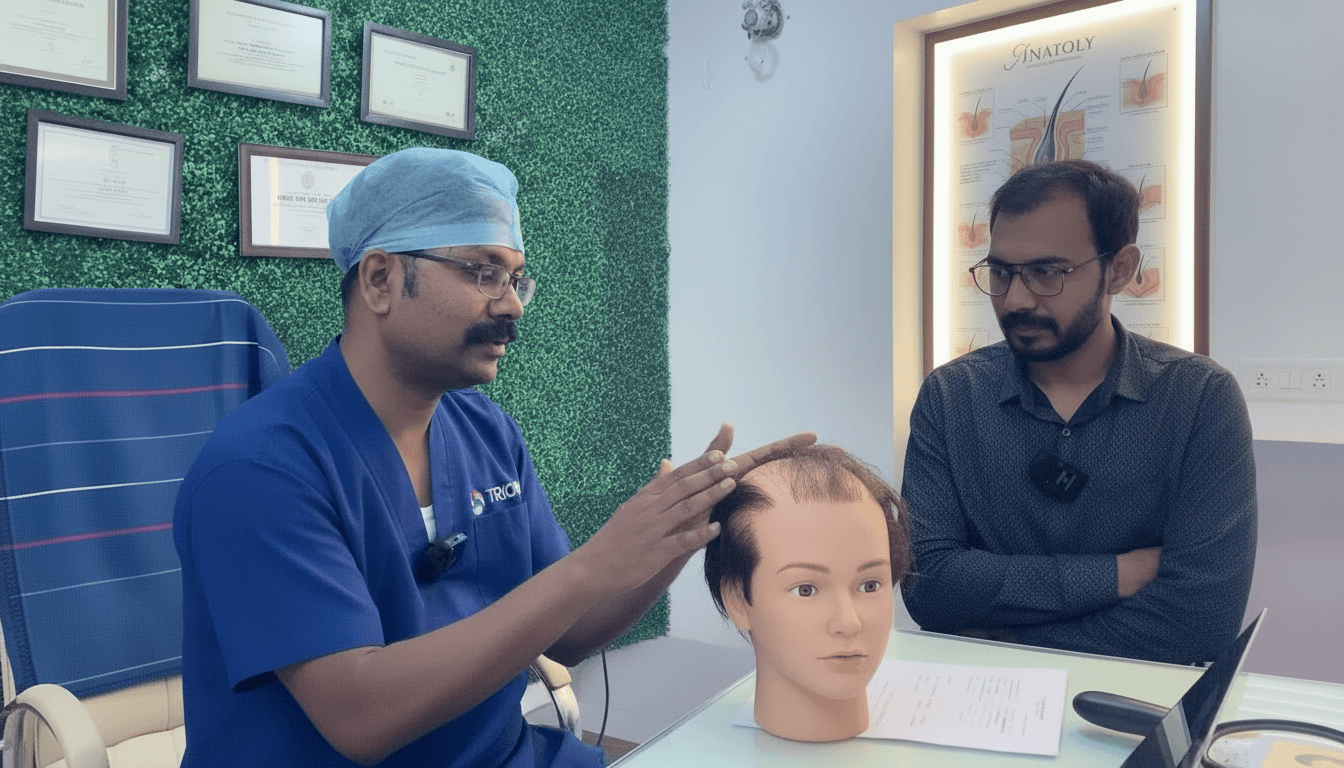
We follow a doctor-led, case-by-case approach to hair restoration. Treatment recommendations are made only after medical evaluation.
- ✓Consultations Led by Qualified Doctors
- ✓Patient-Specific Planning
- ✓Medically Appropriate Recommendations
- ✓Transparent Consultation Process

Frequently Asked Questions
Yes. A consultation is necessary to determine whether a hair transplant or another treatment option is medically appropriate for your condition.
Yes. A consultation is necessary to determine whether a hair transplant or another treatment option is medically appropriate for your condition.
Cost is discussed only after the medical evaluation, once treatment suitability and planning considerations are clearly understood.
Yes. You may share photos for an initial review, which can help provide preliminary guidance. However, final suitability can only be determined through an in-person or detailed medical consultation.

Speak With Our Clinic Team
Consultation helps determine treatment suitability and next steps.
Contact Trichos
Clinic hours and consultation support
- Phone
- 09000566767
- 09000566767
- support@trichos.in