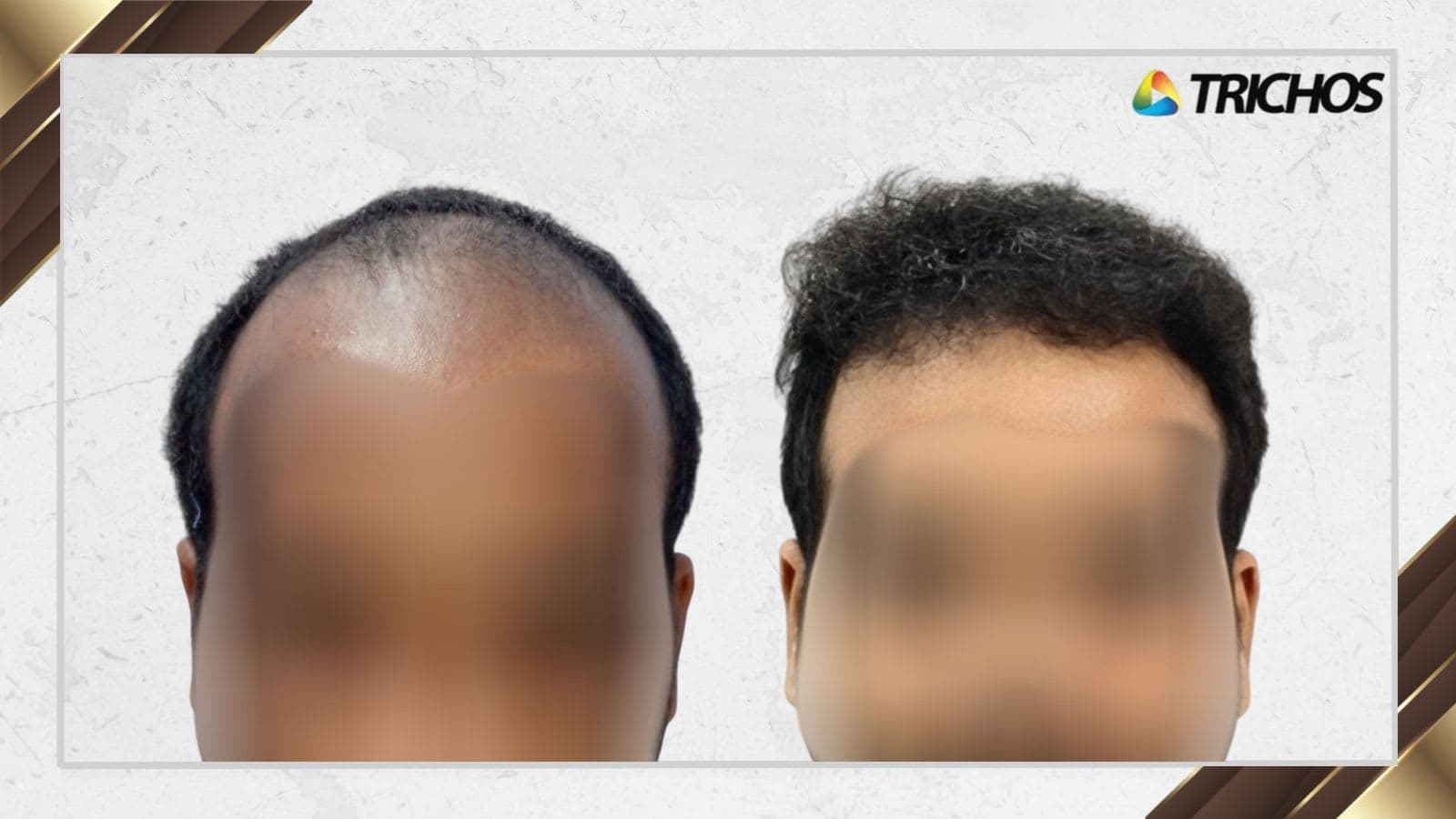
Hair transplant techniques have evolved significantly in recent years, giving patients more options depending on their goals, lifestyle, and level of hair loss. Two commonly discussed techniques today are traditional Follicular Unit Extraction (FUE) and Non-Shaven Long Hair Transplant (NSLHT).
While both methods involve extracting individual follicular grafts, they differ in how the donor area is prepared, how grafts are implanted, and how visible the procedure is during recovery.
Understanding the differences between NSLHT vs FUE hair transplant can help patients choose the method that best suits their needs.
What is Non-Shaven Long Hair FUE?
Non-Shaven Long Hair Follicular Unit Extraction (NSLHT) is an advanced variation of FUE in which the donor and recipient areas are not shaved, and grafts are transplanted with the hair shafts kept long.
According to Dr John Watts, noted hair transplant specialist and Long Hair Transplant pioneer in South India, this approach allows surgeons to visualise hair curl, direction, and density during the procedure itself, rather than relying purely on mathematical density calculations.
This real-time visualisation helps improve aesthetic planning and graft placement, particularly when creating natural hairlines or performing corrective hair restoration.
Dr Watts describes three recognised approaches within non-shaven techniques:
- Pre-trimmed non-shaven FUE
- Direct non-shaven FUE
- Non-shaven long hair FUE (NSLHT)
Each method has specific technical considerations, but they share a common goal: performing hair transplantation without shaving the patient’s existing hair.
“Non-Shaven Long Hair FUE allows surgeons to visualise curl, direction, obliquity and hair orientation during the procedure,” explains Dr Watts.
“This visual preview helps guide placement and aesthetic balance, which can be immensely satisfying for both the surgeon and the patient.”
Another advantage is the immediate preview of donor and recipient areas, allowing surgeons to assess coverage, orientation, and density as the procedure progresses.
This feature can be particularly valuable in body hair transplant procedures, such as:
- Eyebrow transplantation
- Eyelash restoration
- Beard and moustache transplantation
In these areas, precise hair direction is critical for natural results.
Advanced devices and punches sometimes used in NSLHT include:
- UGraft systems
- Zeus device
- Trivellini Octagonal Ring
- Park Multi-wave system
- Devroye extraction platforms
However, successful outcomes depend not only on technology but also on surgical expertise and understanding of tissue behaviour.
NSLHT vs Traditional FUE: Key Differences
When comparing NSLHT vs FUE hair transplant techniques, the main difference lies in whether the scalp needs to be shaved and how visible the procedure is during recovery.
NSLHT vs Traditional FUE: Key Differences
Feature | NSLHT (Long Hair Transplant) | Traditional FUE |
|---|---|---|
Donor Area Shaving | Donor area does not need to be shaved | Donor area usually shaved |
Recipient Area Shaving | Recipient area does not need to be shaved | Often shaved or trimmed depending on case |
Hair Length in Donor Area | Hair kept long | Hair usually trimmed to ~1 mm |
Visible Signs in Donor Area | No visible signs in donor area | Small dot marks may be visible initially |
Visible Signs in Recipient Area | No visible signs in implanted area | Implant marks may be visible initially |
Overall Cosmetic Visibility | No visible surgical signs | Small dot scars that fade over time |
For many patients researching NSLHT vs FUE hair transplant, the decision often depends on lifestyle requirements, donor hair availability, and whether a discreet procedure without shaving is preferred.
How Traditional FUE Hair Transplant Works
Follicular Unit Extraction (FUE) is a minimally invasive hair transplant technique where individual follicular grafts are extracted from the donor area and implanted into the recipient area.
Benefits of FUE
- No linear scar
- Minimal downtime
- Natural-looking results
- Suitable for crown, hairline, and beard restoration
Advanced FUE Features
Modern FUE systems use micro-punch instruments to gently extract follicular units.
Key characteristics include:
- Good graft survival rates
- Minimal scarring
- Natural aesthetic results
- Short graft storage in preservation solutions
- Artistic placement for natural hair direction
- Suitable for medium-to-large graft sessions
During implantation, grafts are placed into pre-made recipient slits, allowing surgeons to control the angle, direction, and density of hair growth.
Why Some Patients Prefer NSLHT
No Shaving Required
One of the biggest advantages of NSLHT is that patients do not need to shave or trim their scalp hair before surgery. This can be important for individuals who want to maintain their appearance for social or professional reasons.
Discreet Recovery
Because the transplanted hair remains long, the procedure usually leaves no obvious visible signs immediately after surgery, allowing patients to resume normal activities more comfortably.
Natural Donor Area Appearance
According to Dr John Watts, the small extraction sites in the donor region heal quickly and are usually concealed by surrounding long hair, creating a seamless appearance.
Real-Time Visual Planning
The surgeon can observe curl pattern, direction, and hair orientation during the procedure, allowing more precise graft placement.
Key Characteristics of Ideal NSLHT Candidates
Extent of Hair Loss
NSLHT works best for small-to-moderate areas rather than extensive baldness.
Donor Area Quality
A healthy donor area with strong hair density is necessary for successful graft extraction.
Hair Length
Longer hair helps conceal the donor and recipient areas during the healing phase.
Lifestyle and Privacy
The technique is ideal for people who want virtually invisible surgery and rapid return to daily activities.
Who is Suitable for Non-Shaven Hair Transplant?
Every patient’s hair loss pattern, donor area, and lifestyle needs are different. A detailed consultation helps determine whether traditional FUE or a Non-Shaven Long Hair Transplant (NSLHT) is the most suitable approach for natural and lasting results.
Non-Shaven Long Hair Transplant, often referred to simply as Long Hair Transplant, is commonly chosen by patients who want discreet hair restoration without shaving the scalp.
Non-shaven long hair transplant procedures are best suited for patients with mild to moderate hair loss.
Typical candidates include:
- Professionals with public-facing roles
- Celebrities and media personalities
- High-net-worth individuals with busy schedules
- ·Patients seeking repair or corrective hair transplant surgery
- Individuals with Norwood scale I–III hair loss
- Women experiencing diffuse hair thinning
- Patients needing targeted hairline refinement
“For patients who prefer not to show visible signs of surgery, this technique provides a discreet solution while maintaining a natural appearance,” notes Dr Watts.
If you are considering NSLHT or FUE hair transplant, a consultation can help determine the most suitable technique for your hair loss pattern.
Book a consultation with Dr John Watts, a Long Hair Transplant pioneer in South India, to receive a personalised treatment plan.